

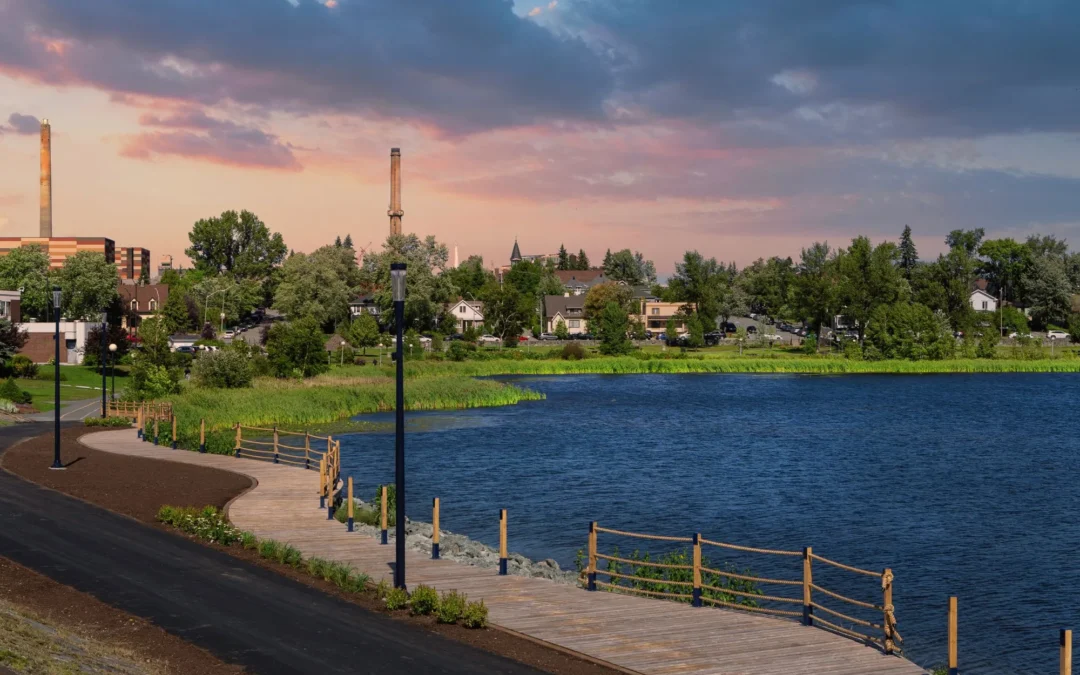
Abitibi isn’t the first place people think of when planning a road trip in Quebec. And that’s exactly what makes it such a special destination! Far from the well-worn trails of Charlevoix or the Gaspésie, this region in northwestern Quebec surprises you with the depth of its mining history, its wide open spaces, and the warmth of its people. And it’s Raphaël, who knows the region well, who shares his must-sees with us!
Days 1 and 2: Val-d’Or, Between Mining and History
If you’re leaving from Montreal, the drive to Val-d’Or is about 6h30. Take the opportunity to stop along the way, in the Laurentians for example. It’s worth leaving well-rested! chutes du lac roland
Val-d’Or is the natural gateway to Abitibi. The region is rich in gold, and its whole identity was built around this underground wealth — hence the city’s name.
Here are the activities we recommend:
Village historique de Bourlamaque
Start with a stroll through the Bourlamaque neighbourhood, a heritage site designated in 1979. This village was built in 1934-1935 by the Lamaque Gold Mines Limited company to house its workers and their families. What immediately strikes you is that the neighbourhood is still lived in: the 68 log single-family homes are real residences, not museum recreations.
As you walk the streets, you can still sense the social hierarchy of the era: the more upscale homes of the managers on the small wooded hill, the more modest quarters of the miners in the workers’ neighbourhood. The village was actually nicknamed “le petit Westmount du Nord” — the company had built a true little town, complete with a tennis court, hotel, theatre, and water and electricity networks. You can explore the site with an audioguide available at the entrance, year-round.
La Cité de l’Or
Right next to Bourlamaque is La Cité de l’Or, the only historic site in Canada where you can descend underground into a former gold mine.
The guided tour has you suited up with a helmet and equipment to explore the underground galleries, accompanied by a guide who tells the story of the Abitibi gold rush from the 1920s onward.
Practical tip: The visit lasts about two hours. Reservations are strongly recommended, especially during peak summer season. Call 855 825-1274 or book online on the Cité de l’Or website.
Val-d’Or – Malartic: 30 min drive
Day 4: Malartic, Canada’s Largest Open-Pit Gold Mine
Malartic is easy to visit in half a day before heading back on the road toward Amos. The city is famous for one spectacular reason: the Canadian Malartic mine, one of the largest open-pit gold mines in the country.
The Canadian Malartic Mine Pit
Right in the heart of downtown, from Belvédère Park, you can climb up to the observatory and find yourself face to face with a breathtaking sight: a massive pit dug by human hands, several miles long and nearly 1,000 feet deep. At the bottom, giant mining trucks look like tiny dots zigzagging along the mine’s ramps.
Access to the Belvédère observatory is free. To go even further, the Malartic Mineralogical Museum offers guided bus tours directly on the operating mine site — a unique opportunity to see from the inside how this industry that shaped the whole region actually works.
One last detail that captures the scale of the project on its own: when the mine was developed in the 2000s, the city had to relocate an entire residential neighbourhood to make room. A story that says a lot about the complex relationship between Abitibi cities and their mining industry!
Malartic – Amos: 45 min drive
Day 4: Refuge Pageau in Amos

Amos is a peaceful town on the banks of the Harricana River, but for adventurers passing through, the real reason to stop is hands-down Refuge Pageau.
Refuge Pageau
A few miles from downtown Amos, Refuge Pageau is a non-profit organization founded in 1986 by Michel Pageau, a former trapper who had an extraordinary gift for connecting with wild animals. It all started simply, when he brought home a young orphaned moose he found in the forest. Then another one came. And another…
Today, the refuge takes in more than 150 injured, sick, or orphaned wild animals every year: wolves, bears, moose, lynx, snowy owls, bald eagles, white-tailed deer, raccoons… About 70% of them can be treated and released back into the wild. The visit follows a wooden boardwalk trail that tells, in three chapters, the story of the Pageau family and their singular relationship with the boreal fauna.
Practical info: Adults: about $16.50, children 3-11: about $8.90, free for under 3. Kids love it! Plan for 2 to 3 hours. Address: 4241, chemin Croteau, Amos.
Amos – Aiguebelle (Mont-Brun sector): 2h drive
Days 5 and 6: Aiguebelle National Park
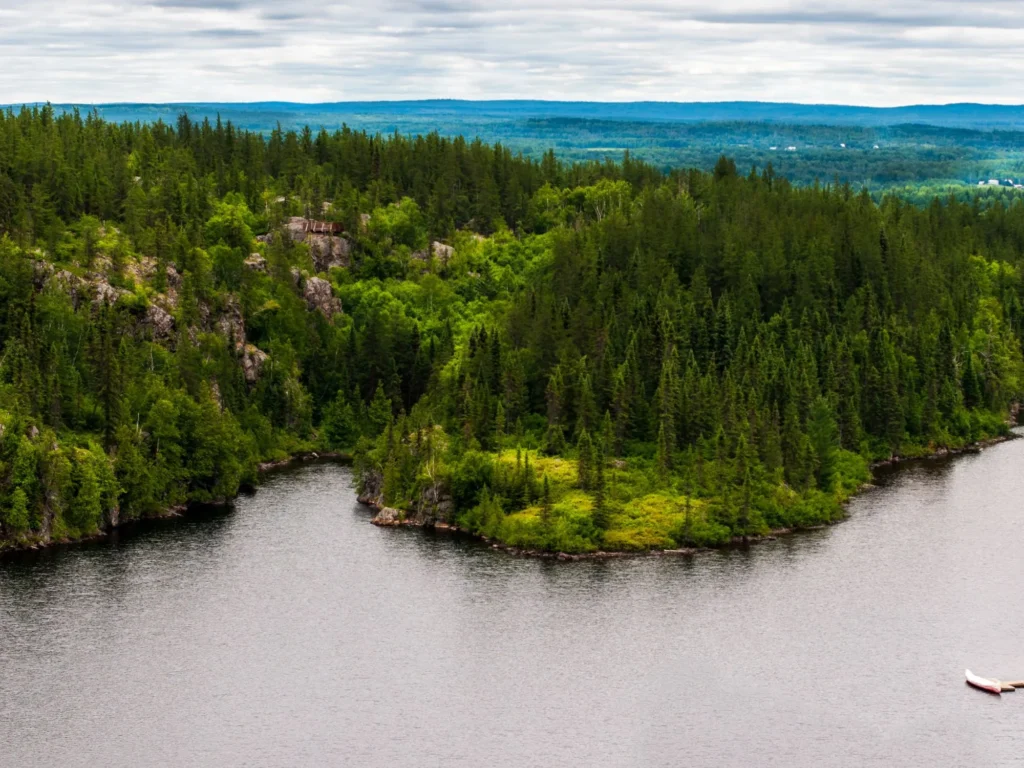
Aiguebelle National Park is an absolute gem. With its 103 sq miles at the heart of the Canadian Shield, it protects landscapes that bear witness to some of the oldest rock on the planet: the Abijévis Hills, whose geological formations date back more than 2.7 billion years. Yes, billion. It’s mind-blowing!
The recommended entry point is the Mont-Brun Discovery and Services Centre (on the Aiguebelle road, about 5 miles from the village of Mont-Brun). That’s where the adventure begins 🙌
Suspended Bridge Hike
The park’s highlight is the suspended footbridge on the La Traverse trail. This bridge is Aiguebelle’s iconic image, and for good reason: the experience of crossing it, with the feeling of floating above the water, stays with you long after! Check ahead on its opening status, as it can be temporarily closed depending on the season.
The Marmites (Potholes) Hike
The Les Marmites trail is another must-do experience. It leads you to fascinating geological formations: giant potholes (basins carved into the rock by glacial whirlpools) and volcanic pillows, direct witnesses to the region’s geological activity billions of years ago.
The trail network stretches over more than 19 miles, with options for all skill levels. The park also offers accommodations: serviced campsites, rustic camping, and small forest shelters for sleeping in the heart of the park. Book well in advance at sepaq.com!
Aiguebelle – Rouyn-Noranda: 1h15 drive
Days 7 and 8: Rouyn-Noranda, Abitibi’s Vibrant City
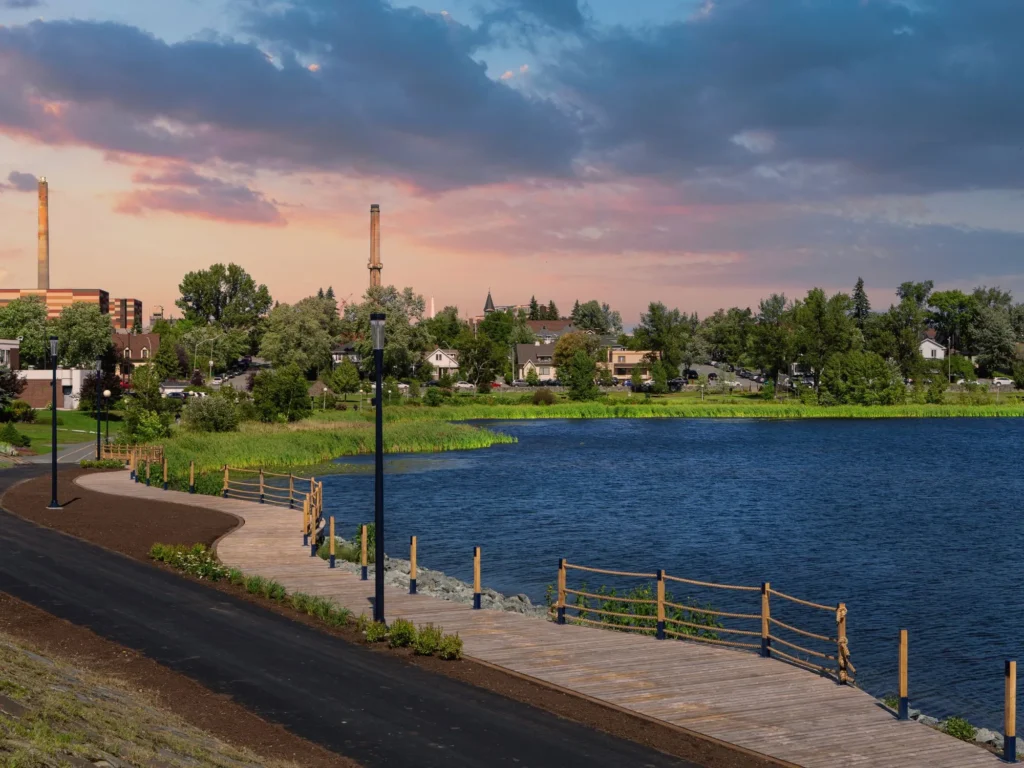
Rouyn-Noranda is Abitibi’s big city, with a cultural and artistic energy that catches adventurers off guard. You could easily spend two days there! 😄
Exploring the City
Take time to walk along Osisko Lake, which sits right at the heart of the city. The Osisko multi-use trail loops 4.8 miles around the lake — a great way to start or end the day.
You can also explore downtown, its art galleries, its shops, and its main street. The city is known for its cultural vibrancy, including the Festival de Musique Émergente!
Hiking the Kekeko Hills
About 15 minutes from downtown, the Kekeko Hills are the ultimate nature getaway. Their name comes from the Algonquin word “kêkêk”, meaning hawk. Across nearly 12 sq miles, 15 marked trails total more than 27 miles of hiking, with difficulty levels ranging from easy to expert. Panoramic views over Renault and Kanasuta lakes, rock faces, overhanging shelters, waterfalls, and a Grande Falaise (Great Cliff) at about 130 feet tall… The site is maintained entirely by volunteers and access is free. Dogs on leash are welcome!
Where to Eat in Rouyn-Noranda?
Poutine Patate Pierrot : The city’s go-to spot for an authentic, generous poutine. A local classic that gets a thumbs-up from locals and travelers passing through alike!
La Cueillette : For a more creative cuisine rooted in the region’s local products. A great spot for a quality meal well-deserved after all that hiking 😉
Rouyn-Noranda – Opémican: 2h30 drive
Days 9 and 10: Opémican National Park
For your last two days, the circuit takes you to Opémican National Park, at the gateway to Témiscamingue. It’s the most recently created national park in Quebec, and perhaps the most transported-to-another-world.
The landscape changes dramatically here. Gone are the black spruce of the boreal forest: Opémican is covered in towering white and red pines that create an almost Mediterranean atmosphere, between the cliffs plunging into Témiscamingue Lake and the calm waters of the coves.
The park is divided into several sectors around Témiscamingue and Kipawa lakes. The main activities are canoeing and kayaking: self-service canoe depots are scattered throughout the territory, letting you explore the islands, bays, and archipelagos at your own pace.
The park also holds a rich heritage: nine archaeological sites along the shores of Témiscamingue Lake, and buildings that tell the story of the early days of the logging industry at the end of the 19th century. Gather around the fire in the evening, under the pines, and let the tranquility of this timeless place wash over you. Magical!
Practical info: The park is open from mid-June to mid-October. Address: 5555, chemin Opémican, Témiscaming. Book your accommodations (camping or ready-to-camp Étoile) at sepaq.com.
Ready to Hit the Road to Abitibi?
If you’d like, you can view and download our itinerary Abitibi road trip directly on our interactive map !
To turn this dream road trip into reality, check out our camper vans available to rent from Montreal and Quebec City. Abitibi is waiting — hit the road! 🚐
A huge thank you to Raphaël for this dream itinerary! 🙏


Recent Comments